




Scalp Oiling for Hair Fall: Does It Really Work?
Scalp oiling is one of the most common remedies for hair fall and dandruff in India.
But here’s the uncomfortable question:
If oiling truly fixed hair fall — why does it keep coming back?
If oiling cured dandruff — why do flakes return within days?
The truth is more nuanced.
Because hair fall doesn’t begin in the hair.
It begins in the scalp.
And your scalp is skin.
Why Scalp Oiling Is So Popular (And Why It Feels Effective)
Scalp oiling is emotional. Cultural. Generational.
It’s associated with:
-
Stronger hair
-
Better growth
-
Reduced stress
-
“Nourishment”
When you oil:
• Hair feels softer
• Friction reduces
• Massage improves temporary blood flow
After washing, hair looks smoother.
But softness is not the same as scalp health.
Oiling changes how hair feels.
It does not always change what’s happening at the root.

Does Scalp Oiling Help With Hair Fall?
This is one of the most searched questions online:
Does oiling reduce hair fall?
Here’s what actually happens:
Oiling can reduce breakage temporarily because it coats the strands.
But hair fall caused by:
-
Scalp inflammation
-
Oil imbalance
-
Clogged follicles
-
Barrier disruption
-
Microbial overgrowth
cannot be corrected by adding more oil.
Hair grows from follicles embedded in living scalp skin.
If that environment is irritated or congested, follicles weaken over time.
Oil does not repair the scalp barrier.
It only sits on top of it.
Does Oiling Help Dandruff?
It depends on the type of dandruff.
1️⃣ Dry scalp flaking
Light oiling may temporarily reduce dryness.
2️⃣ Oily or fungal dandruff
Heavy oils left overnight can worsen buildup and feed yeast growth.
This is why many people notice:
• Flakes disappear after wash
• Then return quickly
• Sometimes worse than before
Oil may soothe symptoms.
It rarely addresses the root imbalance.
Can Scalp Oiling Cause Hair Fall?
Yes — especially when done incorrectly.
Hair fall after oiling can happen because of:
• Aggressive massaging on weak follicles
• Thick oils left overnight
• Improper washing leading to buildup
• Blocked follicles
• Increased scalp congestion
When oil traps sweat, pollution and dead skin cells, the scalp environment becomes stressed.
And stressed skin reacts.
How Often Should You Oil Your Scalp?
If you choose to oil, moderation matters.
General guidance:
• Once a week is enough
• Keep oil on for 30–60 minutes
• Avoid heavy overnight layers if you have dandruff
• Don’t oil an already oily scalp frequently
If your scalp feels greasy yet flaky — oil may not be the missing piece.

The Real Problem: Scalp Barrier Imbalance
Your scalp has:
• A protective barrier
• A microbiome
• A natural oil regulation system
When this balance is disrupted by:
• Harsh shampoos
• Over-oiling
• Pollution
• Product buildup
The scalp reacts.
Common signs:
• Recurring dandruff
• Oil imbalance
• Itchiness
• Hair fall after wash
• Thinning over time
The goal isn’t to strip the scalp.
And it isn’t to suffocate it.
It’s to restore balance.
What Actually Supports Long-Term Scalp Health?
Instead of asking:
“Should I oil more?”
The better question is:
“How do I restore scalp balance?”
This means:
• Gently clearing buildup
• Supporting the scalp barrier
• Regulating oil production
• Reducing inflammation
• Not over-stripping
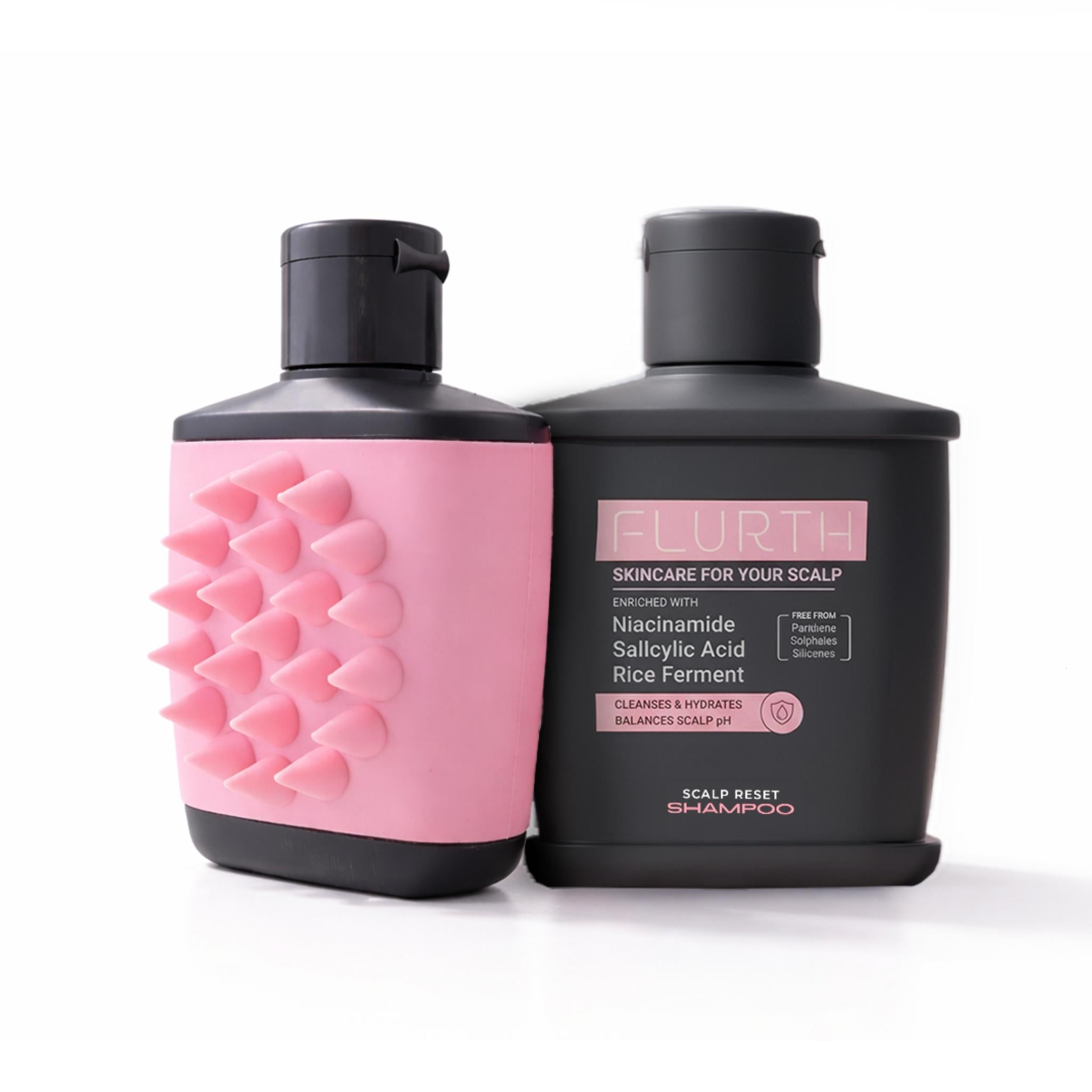
This is exactly why we created a scalp-first formula — designed to reset oil balance without harsh stripping.
👉 Explore FLURTH Scalp Reset (Pre-Launch Access)
https://flurth.com/pages/pre-launch-access
Limited pre-launch batches are currently open before retail release.
When Oiling Helps — And When It Doesn’t
Oiling may help when:
• The scalp is mildly dry
• Hair strands are brittle
• Used lightly and occasionally
Oiling may not help when:
• Dandruff keeps coming back
• The scalp feels greasy but flaky
• Hair fall continues despite oiling
• There’s persistent itchiness
In these cases, the issue is deeper than dryness.
FAQ: Scalp Oiling and Hair Fall
Does oiling reduce hair fall permanently?
No. It may reduce breakage temporarily but does not fix follicle or barrier issues.
Is coconut oil good for dandruff?
It may help mild dryness but can worsen fungal dandruff if left overnight.
Can too much oil cause dandruff?
Yes. Excess oil can trap dead skin cells and promote imbalance.
Should you oil an oily scalp?
If your scalp is already oily, additional oiling may worsen congestion.
What works better than oiling for scalp health?
A scalp routine that restores barrier balance and regulates oil without stripping.
Final Thought
Scalp oiling isn’t wrong.
But it isn’t the full solution.
Healthy hair begins with a healthy scalp.
And healthy scalp begins with balance — not extremes.
Leave a comment
This site is protected by hCaptcha and the hCaptcha Privacy Policy and Terms of Service apply.