




Can You Regrow Hair After Hair Fall? What the Growth Cycle Actually Allows
Hair fall feels alarming.
When you notice thinning or shedding, the first question is always:
Can I regrow this hair?
The answer depends on one important factor:
The hair growth cycle.
Understanding how hair actually grows — and what disrupts it — is key to knowing whether regrowth is possible.
The Hair Growth Cycle Explained
Hair doesn’t grow continuously.
It moves through three phases:
1️⃣ Anagen (Growth Phase)
This is the active growth phase.
It lasts 2–7 years.
Healthy follicles stay longer in this phase.
2️⃣ Catagen (Transition Phase)
A short resting period.
The follicle shrinks and detaches from blood supply.
3️⃣ Telogen (Shedding Phase)
Hair naturally sheds.
New hair begins forming underneath.
On average, losing 50–100 strands daily is normal.
The problem begins when too many follicles shift prematurely into shedding.
Understanding the Hair Growth Cycle (In Simple Terms)
Every hair on your head follows a predictable cycle with three main phases.

Can You Regrow Lost Hair?
It depends.
Hair can regrow if:
• The follicle is still alive
• The scalp environment is healthy
• Inflammation is reduced
• Growth cycle normalizes
Hair cannot regrow if:
• The follicle is permanently damaged
• Scarring has occurred
• Long-term miniaturization has progressed
Most early-stage hair fall is reversible.
But timing matters.
Why Hair Doesn’t Regrow in Some Cases
Even when follicles are alive, regrowth can stall due to:
• Scalp inflammation
• Chronic dandruff
• Oil imbalance
• Barrier disruption
• Poor circulation
• Nutritional deficiency
Hair growth is not only about strands.
It’s about the environment the follicle lives in.
How Scalp Health Affects Hair Regrowth
The scalp is skin.
And like facial skin, it has:
• A barrier
• A microbiome
• Oil regulation
• Inflammatory response
When the scalp is irritated or inflamed:
• Growth phase shortens
• Shedding increases
• Follicles weaken
Calming the scalp helps follicles return to a more stable growth cycle.
Hair Fall After Stress: Can It Grow Back?
Stress-related shedding (telogen effluvium) is usually temporary.
Once the trigger is removed and scalp health improves, regrowth often begins within 3–6 months.
Consistency is key.
How to Support Hair Regrowth Naturally
Instead of chasing aggressive “hair growth” hacks, focus on:
• Supporting scalp barrier function
• Reducing inflammation
• Avoiding harsh stripping
• Managing oil balance
• Gentle cleansing
Regrowth happens when the environment stabilizes.

If Hair Growth Has Slowed, The Root May Be Your Scalp
When hair doesn’t seem to grow back, it’s often because the scalp environment remains stressed.
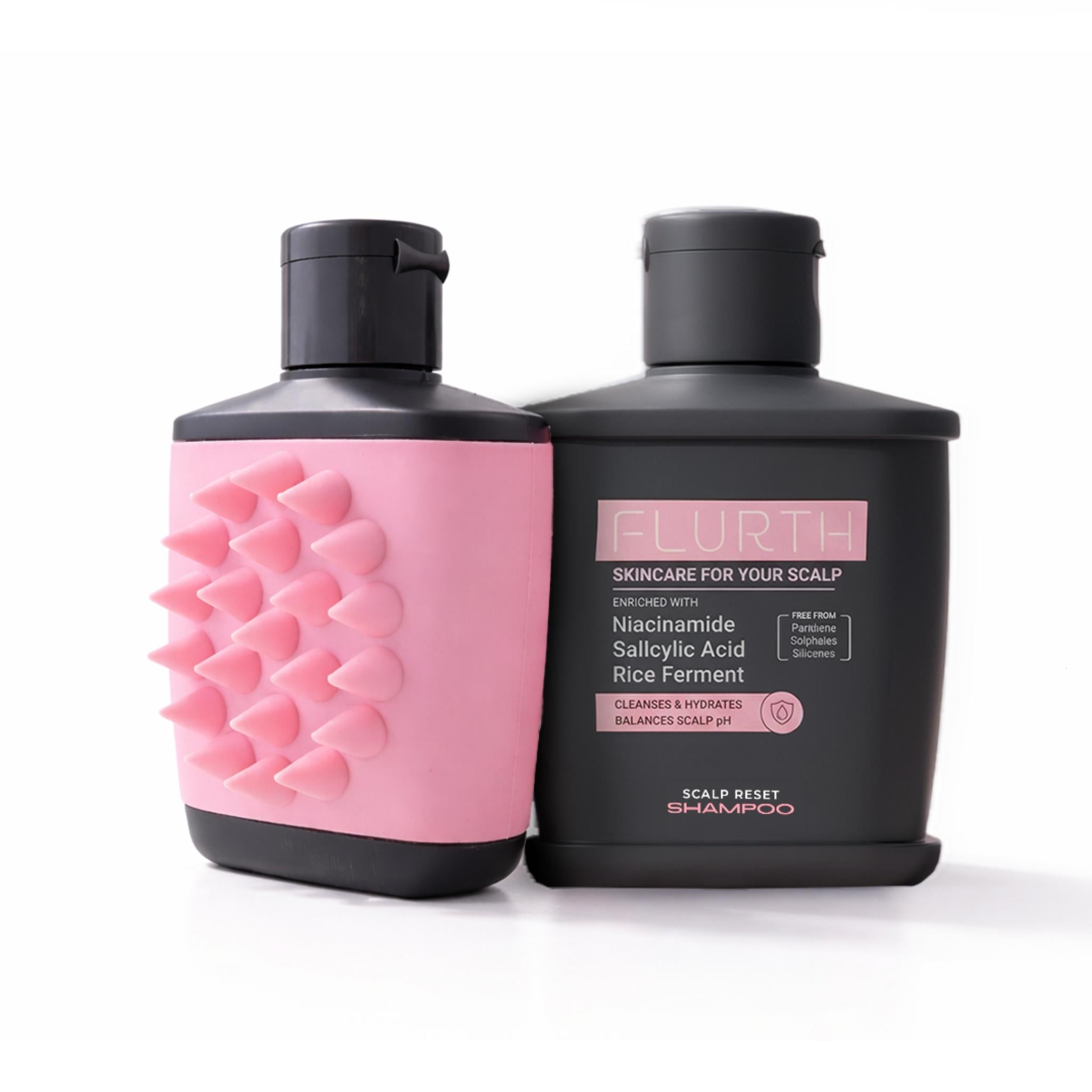
That’s why we created a scalp-first formula designed to:
• Support barrier balance
• Calm inflammation
• Gently clear buildup
• Maintain oil regulation
Without aggressive stripping.
👉 Get Early Access to FLURTH Scalp Reset
Limited batches available before retail launch.
FAQ: Hair Regrowth and Scalp Health
Can hair grow back after thinning?
Yes, if follicles are still active and the scalp environment improves.
How long does it take for hair to regrow?
Typically 3–6 months for visible change, depending on the cause.
Does scalp inflammation stop hair growth?
Chronic inflammation can shorten the growth phase and increase shedding.
Can dandruff prevent hair growth?
Severe dandruff linked to inflammation may weaken follicles over time.
Is regrowing hair always possible?
Not in advanced follicle damage cases, but early-stage hair fall is often reversible.
.
Leave a comment
This site is protected by hCaptcha and the hCaptcha Privacy Policy and Terms of Service apply.