

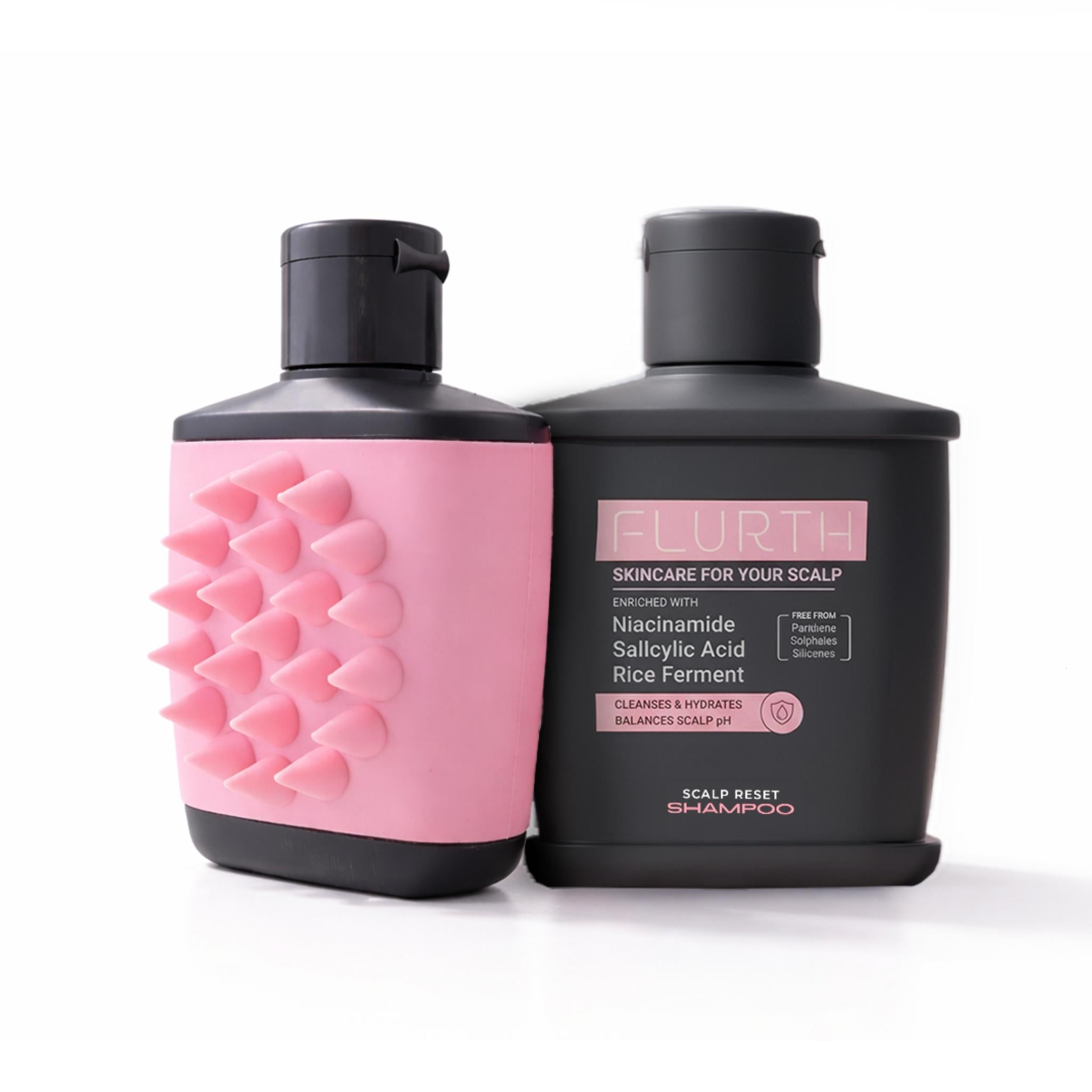



What a Shampoo Should Do for Scalp Health (And Why Most Shampoos Fail)
Modern scalp care treats shampoo as a scalp treatment step, not just a cosmetic cleanser for hair strands.
But shampoo doesn’t touch the hair first.
It touches the scalp.
And when shampoo is designed only for hair aesthetics — shine, smoothness, foam — scalp health is often compromised quietly over time.
To understand what shampoo should do, we need to stop evaluating it as a cosmetic and start seeing it as skincare for the scalp.
The Original Role of Shampoo (And How It Changed)
Originally, shampoo had a simple purpose:
-
Remove oil
-
Remove dirt
-
Allow hair and scalp to feel clean
Over time, shampoos evolved to prioritise:
-
Foam
-
Fragrance
-
Instant softness
-
Visual shine
But very little attention was paid to:
-
Scalp biology
-
Barrier function
-
Inflammation
-
Long-term follicle health
This shift explains why many people feel clean after washing — yet continue to struggle with itch, flakes, oiliness, or hair fall.
What Shampoo Should Actually Do for the Scalp
A scalp-supportive shampoo has a very specific job.
1. Cleanse Without Stripping the Scalp
Effective cleansing means:
-
Removing sweat, oil, pollution, and buildup
-
Without removing essential lipids
-
Without triggering dryness or irritation
Over-cleansing damages the scalp barrier.
Under-cleansing clogs follicles.
Balanced cleansing sits in the middle.
Well-designed shampoos focus on rinse-clean performance, not aggressive removal.
2. Protect the Scalp Barrier
The scalp barrier keeps moisture in and irritants out.
A good shampoo should:
-
Avoid repeated barrier disruption
-
Leave the scalp comfortable, not tight
-
Support recovery between washes
When the barrier is protected:
-
Itch reduces
-
Oil production stabilises
-
Sensitivity decreases
Barrier-respecting shampoos behave more like gentle facial cleansers than detergents.
3. Keep Follicles Clear and Oxygenated
Hair grows from follicles that need space and oxygen.
Shampoo should:
-
Prevent buildup around follicle openings
-
Rinse cleanly from dense hair areas
-
Avoid residue that coats the scalp
Blocked follicles don’t always cause visible flakes —
but they quietly weaken hair growth over time.
4. Maintain Scalp Comfort Between Washes
A shampoo’s job doesn’t end when you rinse it out.
Between washes, the scalp should:
-
Feel comfortable, not itchy
-
Regulate oil gradually
-
Stay calm, not reactive
If the scalp becomes oily or itchy within hours, it’s often a sign that cleansing was either too harsh or incomplete.
5. Support Long-Term Scalp Balance
The goal of shampoo is not instant perfection.
It’s long-term stability.
A good shampoo:
-
Works consistently over weeks
-
Reduces scalp reactivity
-
Makes the scalp less dependent on constant fixing
When scalp balance improves, hair quality often follows naturally.
Why Most Shampoos Don’t Do This
Many shampoos are still formulated to:
-
Maximise foam
-
Mask dryness with conditioners
-
Deliver instant softness
These priorities often ignore:
-
Scalp barrier health
-
Inflammation
-
Follicle environment
This is why people experience:
-
Clean hair but itchy scalp
-
Soft lengths but ongoing hair fall
-
Short-term relief, followed by relapse
The shampoo “works” cosmetically — but not biologically.
Why Shampoo Alone Still Isn’t Enough
Even the best shampoo has limits.
Shampoo can:
-
Cleanse
-
Protect
-
Support balance
But it cannot:
-
Repair chronic scalp damage overnight
-
Reverse months of inflammation instantly
-
Replace a scalp-appropriate routine
Shampoo is the foundation, not the full solution.
How to Evaluate a Shampoo Going Forward
Instead of asking:
“Does this shampoo make my hair look good?”
Ask:
-
Does my scalp feel comfortable after washing?
-
Does oil return gradually?
-
Do I need fewer fixes between washes?
-
Is my scalp calmer over time?
These signals matter more than foam or fragrance.
FAQ's
What should a shampoo do for scalp health?
A shampoo should remove excess oil, dirt, sweat, and product buildup while maintaining the scalp’s natural barrier and hydration. It should cleanse without over-stripping, support scalp microbiome balance, and reduce irritation or inflammation.
Can shampoo improve hair growth?
Shampoos cannot directly change genetics or hormones, but they can improve the scalp environment that supports healthy hair growth. A clean, balanced scalp helps follicles function optimally and reduces inflammation that can disrupt the hair growth cycle.
How often should I use shampoo for a healthy scalp?
The ideal frequency depends on scalp type, oil production, climate, and lifestyle. Some people benefit from frequent washing to control oil and buildup, while others need gentler routines to avoid dryness. The goal is a clean but not stripped scalp.
Do shampoos affect scalp microbiome?
Yes. Shampoos can influence the scalp microbiome by reducing excess microbes and buildup. Gentle formulations that balance cleansing and hydration help maintain a healthy microbial environment, while harsh cleansing can disrupt scalp balance.
The Takeaway
Shampoo should do more than clean hair.
It should:
-
Respect the scalp as skin
-
Support the scalp barrier
-
Keep follicles clear
-
Maintain comfort between washes
-
Contribute to long-term scalp balance
When shampoo is designed with scalp health in mind, it stops being a quick fix — and becomes a quiet, consistent support system.
That’s when real change begins.
Leave a comment
This site is protected by hCaptcha and the hCaptcha Privacy Policy and Terms of Service apply.