



Article: Why Your Dandruff and Hair Fall Keep Coming Back (It’s Not Your Shampoo)

Why Your Dandruff and Hair Fall Keep Coming Back (It’s Not Your Shampoo)
Your Scalp Is Skin: Why Hair Problems Can’t Be Fixed with Shampoo Alone
 Scalp health is the foundation of healthy hair growth, and scalp care routines are becoming as essential as skincare routines.
For decades, hair care has focused on one thing: the hair you can see.
Shine. Smoothness. Volume. Frizz control.
But almost every persistent hair concern — hair fall, thinning, dandruff, itch, oiliness, slow growth — doesn’t start in the hair at all.
It starts at the scalp.
Your scalp is not just “where hair grows from.”
It is living skin, with its own barrier, microbiome, oil balance, and inflammatory responses — just like the skin on your face.
And until scalp health is treated as skin health, hair problems will continue to return, no matter how many shampoos you switch.
What Exactly Is the Scalp?
The scalp is an extension of your facial skin, with some critical differences:
-
It has more oil glands per square centimetre than most parts of the body
-
It is covered by dense hair follicles, which can trap oil, sweat, pollution, and residue
-
It experiences constant friction, occlusion, and product buildup
In simple terms:
The scalp is high-functioning skin under constant stress.
When this skin is balanced, hair grows normally.
When it is inflamed, clogged, dry, or irritated, hair growth is disrupted — even if the hair shaft itself looks fine initially.

Why Hair Problems Start at the Scalp
Hair is biologically “dead” once it emerges from the follicle.
It cannot repair itself. It can only be maintained cosmetically.
The scalp, however, is alive.
When scalp skin is unhealthy, several things happen simultaneously:
-
Hair follicles receive less oxygen and nutrients
-
Oil production becomes erratic (too much or too little)
-
Micro-inflammation develops around follicles
-
The hair growth cycle shortens prematurely
This is why:
-
Hair fall often increases after washing
-
Dandruff keeps returning despite anti-dandruff shampoos
-
Hair feels thinner even when breakage isn’t visible
The problem isn’t the hair.
It’s the environment the hair is growing from.
Why Shampoo Alone Isn’t a Solution
Shampoo was originally designed for cleansing, not treatment.
Its primary function is to:
-
Remove surface oil
-
Remove dirt and pollution
-
Temporarily refresh the scalp
What shampoo does not do on its own:
-
Repair a damaged scalp barrier
-
Calm chronic scalp inflammation
-
Reset oil imbalance
-
Support long-term follicle health
This is why people experience a familiar cycle:
-
Shampoo feels effective for a few weeks
-
Symptoms slowly return
-
The shampoo is blamed — and replaced
The issue isn’t that shampoo “stopped working.”
It’s that cleansing without treating skin imbalance is incomplete care.
Scalp Skin Has a Barrier — Just Like Facial Skin
Healthy skin has a protective barrier that:
-
Retains moisture
-
Keeps irritants out
-
Maintains microbial balance
The scalp has this barrier too — and it is easily disrupted by:
-
Over-washing
-
Harsh surfactants
-
Frequent oiling without cleansing
-
Heavy product layering
-
Scratching and friction
When the scalp barrier is compromised, symptoms appear:
-
Tightness or soreness
-
Itch without visible flakes
-
Oiliness paired with dryness
-
Increased hair fall during routine washing
These are not “hair problems.”
They are skin barrier issues.
Why Traditional Hair Care Thinking Falls Short
Most hair routines focus on:
-
Length care
-
Surface smoothness
-
Temporary shine
But none of these address:
-
Follicle congestion
-
Inflammation at the root
-
Scalp dehydration
-
Imbalanced oil production
This is why:
-
Hair masks improve feel but not fall
-
Oils add shine but worsen buildup
-
Serums coat hair but don’t support growth
Without scalp skin health, hair care becomes cosmetic — not corrective.
What a Healthy Scalp Actually Looks Like
A healthy scalp is not perfectly dry or perfectly oily.
It is:
-
Comfortable (no itch or tightness)
-
Calm (no redness or sensitivity)
-
Balanced (oil returns slowly after washing)
-
Clean at the follicle opening (not congested)
When the scalp is healthy:
-
Hair sheds less excessively
-
Growth cycles stabilise
-
Hair feels fuller over time — not overnight
Healthy hair is not forced.
It is allowed to grow.

The Shift: From Hair Care to Scalp Care
Modern hair science increasingly recognises that:
Hair quality is a downstream result of scalp health.
This is why advanced routines now focus on:
-
Gentle but effective scalp cleansing
-
Scalp exfoliation (to clear follicle buildup)
-
Lightweight treatments that respect the scalp barrier
-
Long-term consistency over quick fixes
It’s the same evolution facial skincare went through years ago — moving from harsh cleansers to barrier-supporting routines.
Scalp care is simply skincare, applied where hair grows.
FAQ's
Is scalp skin different from facial skin?
Yes, the scalp has more oil glands and follicles, making it more prone to buildup and inflammation.
Can unhealthy scalp cause hair fall?
Yes. Inflammation and clogged follicles can disrupt the hair growth cycle.
Why do shampoos stop working?
Shampoos cleanse but don’t repair scalp barrier or inflammation.
How often should I wash my scalp?
Depends on oil production, climate, and activity level.
The Takeaway
If you’ve been switching shampoos endlessly…
If hair fall keeps returning…
If your scalp never feels truly comfortable…
The problem isn’t your hair.
It’s that your scalp has been treated as an afterthought, not as skin.
Hair problems cannot be fixed at the surface alone.
They require scalp understanding, scalp balance, and scalp-first care.
This is where real, lasting hair health begins.
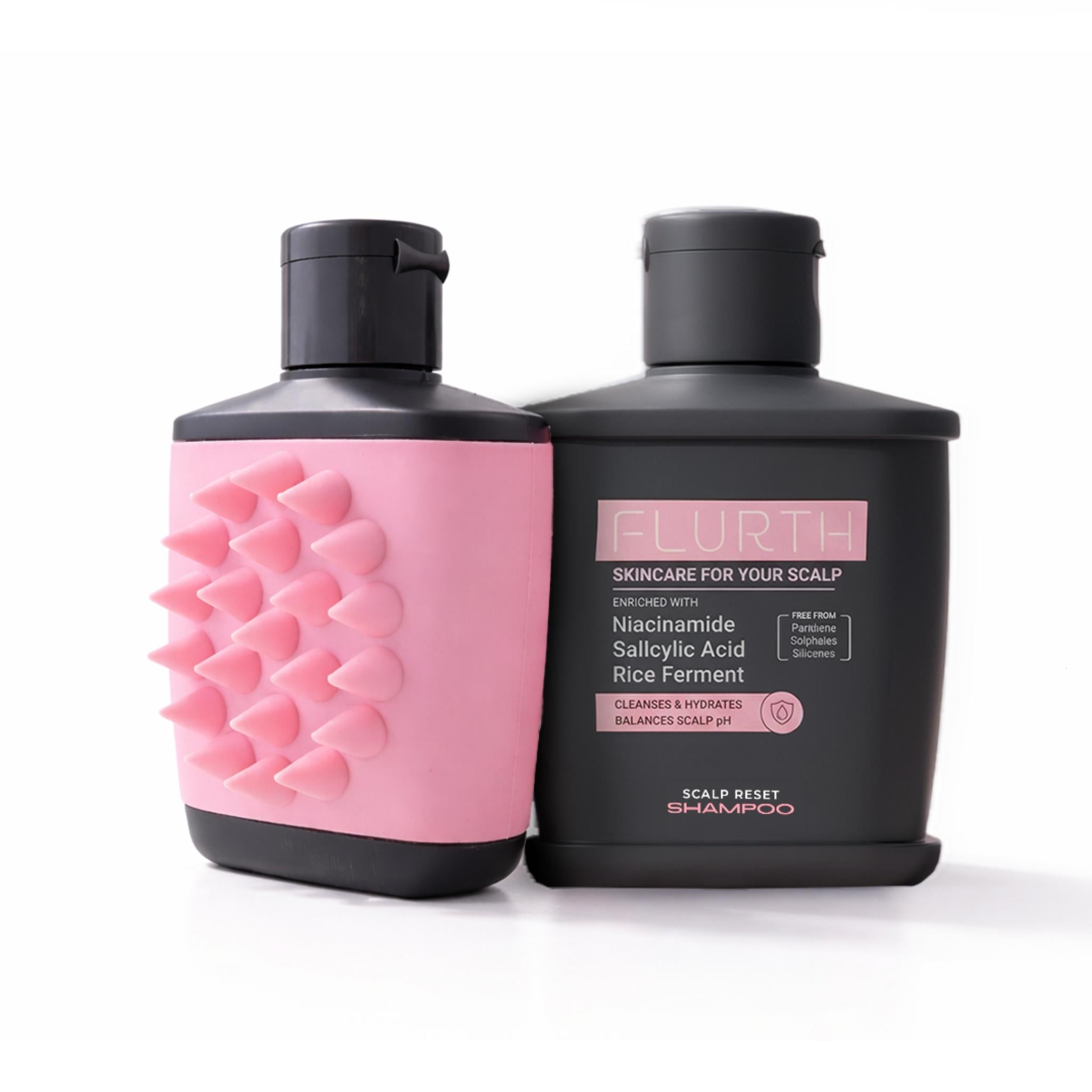
We’re launching a scalp-first formula designed to restore balance instead of stripping it.
Pre-launch access is now open for limited batches. Click here
Leave a comment
This site is protected by hCaptcha and the hCaptcha Privacy Policy and Terms of Service apply.