

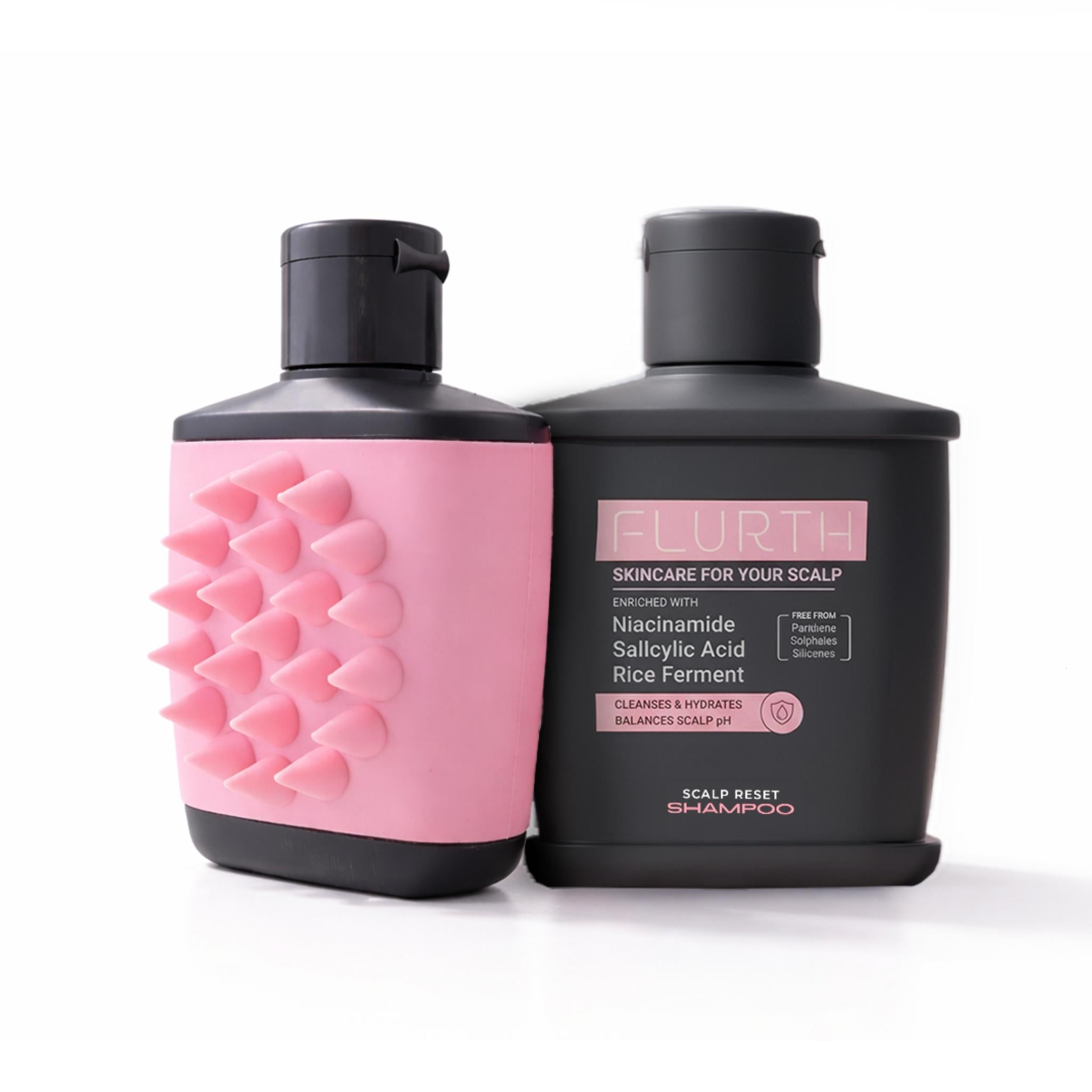



How Often Should You Wash Your Hair? It Depends on Your Scalp
How often should I wash my hair?
It’s one of the most searched hair questions — and one of the most misunderstood.
You’ll hear advice like:
-
Twice a week is ideal
-
Daily washing causes hair fall
-
Training your scalp to be less oily works
But the truth is simpler — and more nuanced:
There is no universal washing schedule that works for everyone.
Because hair washing frequency depends far more on your scalp than your hair.

Why “Twice a Week” Advice Is Outdated
The idea of washing hair only once or twice a week came from a time when:
-
Shampoos were harsher
-
Styling products were fewer
-
Pollution exposure was lower
-
Scalp care wasn’t well understood
Today, scalps deal with:
-
Sweat
-
Pollution
-
Product buildup
-
Stress-related oil imbalance
For many people, washing too infrequently can actually worsen scalp health.
Clean scalp ≠ damaged hair
Over-cleansed scalp ≠ healthy scalp either
Balance matters more than fixed rules.
Why Hair Type Is Less Important Than Scalp Type
Most people decide how often to wash based on hair texture — curly, straight, dry, frizzy.
But hair is biologically inactive.
It doesn’t produce oil.
It doesn’t inflame.
The scalp does.
Your washing frequency should respond to:
-
Oil production
-
Sensitivity
-
Flaking
-
Comfort between washes
Not just how your lengths look.
Signs You’re Under-Washing Your Scalp
Under-washing is more common than people realise — especially among those trying to “protect” their hair.
Signs include:
-
Scalp feeling itchy or heavy between washes
-
Oil returning very quickly
-
Flakes that feel greasy, not dry
-
Hair fall increasing during washes
-
Scalp odour or discomfort
Under-washing allows:
-
Oil and sweat buildup
-
Blocked follicles
-
Low-grade inflammation
A scalp that isn’t clean can’t regulate itself properly.
Signs You’re Over-Washing Your Scalp
Over-washing can also disrupt scalp balance — especially with aggressive cleansing.
Signs include:
-
Tightness or dryness after washing
-
Itch without visible flakes
-
Increased sensitivity
-
Hair feeling clean but scalp feeling uncomfortable
-
Oiliness returning rapidly (rebound oil)
This happens when the scalp barrier is stripped faster than it can recover.
Over-washing doesn’t always look dry — sometimes it looks oily and reactive.

Oily Scalp vs Dry Scalp: How Frequency Differs
Oily or Combination Scalp
-
Oil returns within 24–48 hours
-
Scalp feels uncomfortable if not washed
-
Buildup accumulates quickly
These scalps often do better with:
-
More regular washing
-
Gentle but effective cleansing
-
Consistency over infrequency
Skipping washes doesn’t “train” oil glands — it often worsens imbalance.
Dry or Sensitive Scalp
-
Tightness or itch after washing
-
Minimal oil production
-
Sensitivity to friction or products
These scalps often benefit from:
-
Slightly less frequent washing
-
Barrier-respecting cleansers
-
Adequate recovery time
But dryness doesn’t mean avoiding cleansing entirely.
How to Adjust Washing Frequency Without Damage
Instead of following rigid schedules, use scalp feedback.
Ask:
-
Does my scalp feel comfortable between washes?
-
Is oil returning gradually or suddenly?
-
Is itch increasing or decreasing over time?
Practical adjustments:
-
Increase frequency if scalp feels heavy or itchy
-
Reduce frequency if scalp feels tight or sensitive
-
Focus on gentle cleansing rather than skipping washes
-
Be consistent for 2–3 weeks before judging results
Scalp balance takes time — sudden changes often backfire.
Why Consistency Matters More Than Frequency
Scalps thrive on predictability.
Irregular washing patterns — over-washing one week, under-washing the next — confuse oil regulation and prolong imbalance.
A stable routine allows:
-
Barrier recovery
-
Normalised oil production
-
Reduced inflammation
Consistency beats experimentation.
The Takeaway
There is no perfect number of washes per week.
The right frequency is the one that:
-
Keeps your scalp comfortable
-
Prevents buildup
-
Respects the scalp barrier
-
Feels sustainable long-term
Healthy hair starts with a scalp that’s clean — but not stressed.
When you listen to your scalp instead of following outdated rules, washing becomes supportive, not damaging.
That’s when scalp health — and hair quality — begin to stabilise.
Leave a comment
This site is protected by hCaptcha and the hCaptcha Privacy Policy and Terms of Service apply.